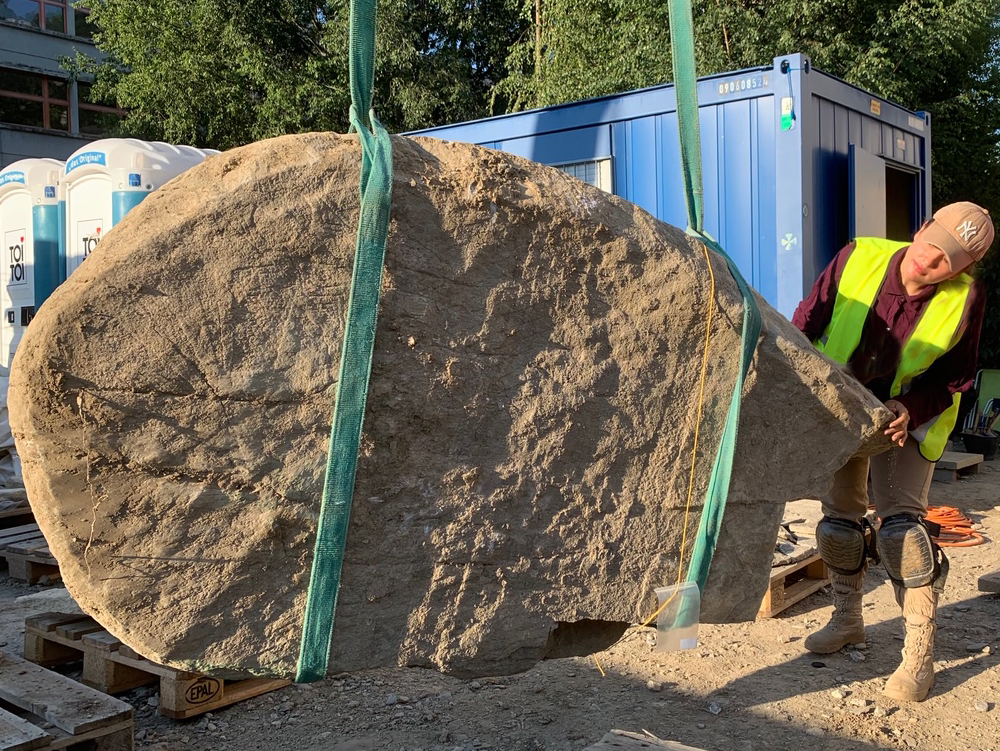
Tashbaba/Balbal from Scythian and Turkish Khaganate (Göktürk) Periods.
* Balbal (Tr.of ety.), represents the enemy, even if it is from an other Turkish tribe. They are simple and without an oath cup.
* Tashbaba (Tr.of ety. Taşbaba=Stonefather) with oath cup, represents the Leader/İl (El)başı/Kağan.
These are also one of the material proof, that the "Scythians" and "Turks" are kinsmen. Because the "Indo-Iranians" doesn't have this culture/tradition, neither does the Mongolians !
Turks - Altai
Korsika'daki Balbalın Deniz İnsanları dedikleri "Ege Göçleriyle" gelenlerden kaldığını düşünüyorlar. Bu durumda Pelasgların arasında sonradan Kimmer olarak anılan boylar da olmalı. Hatta Çingiz Garaşarlı Etrüsklerin arasında Kimmerler olduğunu belirtir. Böylece niye hem Korsika'da, hem de Altay ve Doğu Avrupa'da aynı tip taşbabalar olduğunu anlayabiliriz. Filitosa V - Corsica/link They think that these belongs to the people who came with "Sea People". In that case, these statues belongs to Pelasgians (Sea Saka/Sacae) or Cimmerians. We do know that among the Etruscans (NON-IE) there was also Cimmerians in Italy at that time, so there must be also Cimmerians among Sea People.
That's why the similarty Altai (Turks) - Corsica (Filitosa V)
From France / Aveyron /link
Cuman Turks - 12th-13th c (Ukraine?)
On one of the statue has a quiver and a metal belt buckle... So these are from the Cimmerian/Scythian period, and doesn't belong to Celts or Germanic people. We see also in Germany such statues, but that does not mean it belong to the Germanic people ! They didn't even had a name as Germanic at that time and it is not even Indo-European of etymology! Besides, some Cimmerian tribes are written as Germanic tribe in Tacitus (Gambrivi). The Basques (Euskal, Euskara) for example, are one of the NON-Indo-European people in France, who came from Caucasus İberia, which was interactive with the Cimmerians and Scythians. (Basque language is agglutinative language, so NON-IE. And there are many words shared with the Karachay-Balkar Turkish.)
You can also look at Anatole A. Klyosov works
Germany and Italy (below) / link Even the word "menhir" is not etymologyical Indo-European, it is Turkish, It was written in Orhun inscriptions as "Mengü" (with m>b also as Bengü, meaning "eternal memorial stone") = Mengü > Menghur > Menhir.
It is important to follow it in time with the question "Who continued this culture/tradition?" !
Turkish Balbals/Tashbaba
Did the European tribes (such as Franks) continued this in AD times? No, they did not... But Turkish tribes did... Such as; Turkish Khaganate (Göktürks), Huns (mostly Ak-Hun, i.e. Hephthalites, which the word was derived from the other name of the White-Huns = Abdaly > Hapdalit > Hephthalites ), Avars and Kipchaks (Polovets)-Cumans, etc. And some, not many, other nations did borrowed this tradition/culture, but did not continued or they were mixed with the Cimmerian/Scythian people. Because it was a strange culture/tradition for others. Even at the end of the 19th- beginning 20th c AD in Turkiye, we have many Tashbaba or Balbal to be seen.
Altay (Altai) - Turkish kurgans and Tashbaba/Balbals
The political pressure back in time on Turkology in the USSR (mass arrests, imprisoning, killing the Turkology scientist, scholars, changing the names of the tribes/nations, and not using the word "Turk" - link), doesn't work anymore, and definitely not the pressure of the "Westernes" who took this "erasing" idea over form the USSR ! "Westernes" are not the authority to write "the history of the Turks"! Turkish scientist are the authority of their own history! Because many do not know wat "Artuk, Selçuk, Kıpçak or Memluk" is, if the Westerner writes "Artuq, Seljuk, Polovets or Mamluk" without the word "Turk" in his book or article. But we do know immediately, when a scholar write "Artuk, Selçuk, Kıpçak or Memluk", that they are one of the Turkish tribes, we do not need the word "Turk" extra next to the word "Kipchak" for example !... And please don't underestimate the history of the Turks, be open minded... maybe one of your ancestor comes from one of these Turkish tribe that I mentioned before...
Semra Bayraktar (SB)
Scythians-Turks
The continuity of art and culture/tradition is the Social DNA of the nations.
Not "Turkic", but "Turk"
Turcae - Turks - Scythians
Kazakh Prof. Salkaroğlu /Turks-Scythians
Turks - Scandinavians/Vikings
Turks
Scythians-Turks
Franks?