artiquids etiketine sahip kayıtlar gösteriliyor. Tüm kayıtları göster

8 Eylül 2018 Cumartesi

Wolf Dragons and Turkish Shot - Turkish Culture and Art


Relief of "Wolf-Dragon", 13th, Seljuk Turks, İnce Minareli Medrese Museum/Konya


In Turkish mythology and cosmology "Dragon" symbolize the Universe ("Evren"). This became later an expression to use for cosmos.  The word "Dragon" is in old Turkish (Mahmud al-Kashgari) "Büke / Böge" or "Yelbüke", is the origin of the word "Bükmek" (twist), "Bükülmek" (bend). Dragon evolved the Universe, he controls the time; "Infinite Time Cycle", and was the "Time God". Therefore, the Cycle of the Sky was associated with the "Dragon". The word "Evren" for the creature "Dragon" is used today with the word "Ejder / Ajdar".

Lets look at the word "Evren":
"Ev" = Home ;
"Evren" = Universe, Dragon (creature); 
"Evrim" = Evolution ; "Evrilmek" = To evolve
"Evirmek" = Turned around ;
"Çevirmek" = Turned, translate ; 
 "Evirip Çevirmek" an expression : 
example: (Bu işi) evirip çevirebilir misin? = Can you manage (this business)


Primitive human conception was not linear but cyclical. The creation repeated periodical every year; the continuity of the seasons, sun's rebirth, cycle of the moon. That brought the idea of "evolving, turning, timeless, endless great universe"; dragon was chasing his tail... İn Turkish cosmology the Wolf headed Dragon is also the master of the water and air, and the symbol of the state and sovereignty.


Wolf-Dragon with wings, Wooden Door, 3th c, Niya ancient city, Tarim Basin, Uyghur Turks


Textile piece (batik on cotton), Niya ancient city, Tarim Basin, Uyghur Turks


Wolf Headed Dragon, Karatay İnn, 13th c, Kayseri/Turkey, Seljuk Turks


"Wolf-Dragons" was popular among Gokturks (see Bugut Monument, 7th c), Seljuks and Artuqids. But when it comes for giving info about it, always separated with "tribe names", and never used as "Turkish Culture & Art" in museums or articles. Which leads to confusion among peoples who does not know what Seljuks, Artuqids, Safavids or Mamluks are! /(They are just dynasty names, but Turk of ethnic). On the otherhand, a huge art-culture emerges when we combine the arts under "one name" as "Turkish Culture & Art", which was separated with "tribe names". But when it comes to  "Greek" or "Roman" Art, "they" (scholars, museums, etc...) combined all the "tribes" under "one name" !. That's just hypocrisy...


 "Wolf-Dragons", 14th c, Mamluk Turks.
Gateway of the Aleppo Citadel/Syria.

"Wolf-Dragon" represents the Universe
Turns the Universe around

Wolf-Dragon, tile, 16th-17th c Ottoman or Safavid Turks.


Me personally (and some) do not use the word "Turkic", because of the meaning: "The Turkic peoples are a collection of ethnic groups that live in central, eastern, northern, and western Asia as well as parts of eastern Europe. They speak languages belonging to the Turkic language family".

This is wrong expression, especially "collection of ethnic groups", because they are TURK of ETHNİC, and not some strange ethnic groups who came together.

Among us it is; "Siberia Turk (Sibirya Türkü)", "Altai Turk (Altay Türkü)", "Kazakh Turk (Kazak Türkü)" , "Uzbek Turk (Özbek Türkü)", "Saka Turks (Saka Türkü)", etc... and not like "Avar Turkic", "Kazakh Turkic", or "Turkmen Turkic", etc. ... The world is confused about the tribe names, they think that the "tribe names" are in "different ethnic". It is saying like; "Black American and African American" it is just simple "African", or saying like; "American English and England English", but it is just "English". This description applies the languages too: for example; "Kazakh language" or "Azerbaijani language" - There is no Azerbaijani or Kazakh language, both are talking in Turkish - dialect, but Turkish - just simple is that. Given different names "separate the ethics", which are "the same people, same ethnic" ..

Some Tribe names: 
Aqqoyunlu (Ak=White, Koyun=Sheep, Turkoman=I am Turk) , Karaqoyunlu (Kara=Black, Sheep, also written as Qara Qoyunlu, Artuqid (Artuklu), Zengid, Safavid, Afsharid, Seljuk, Ottoman, Pecheneg, Kipchak, Mamluk, Avar, Hun, Khazar, Cuman, Oghuz, Turkmens, Uyghur, Gokturk, Nogai, Kazakh, Kyrgyz, Azerbaijani, Bashkir, Crimean Tatars, Qashqai, Yakut (Saha-Saka), Kumyk, Karachay, Gagauz, Tuvan, Uzbek, Karaite, Bulgar (before slavified), Atabegs, etc. and there are subgroups of these tribes with there clan or family names:

Example: Huns and Oghuzes have 24 tribes and many subgroups, like Ağaçeri Turks (Tree people: in ancient times as Agathyrsi, a Scythian+Hun tribe); or Oghuz tribes like Kayı (Ottoman comes from); Kınık (where Seljuk Turks comes from).... but all of them are TURK of ETHNİC. And many of these Turkish Tribes live in Turkey, and that's why it is called only "Turks". In Dutch they called as TURKSE VOLKEREN; the meaning is TURKISH PEOPLES, and that is one of the right expression.

They do call also as "Islamic", but religion is spread among differend nations. You have under "İslam Art" : Arabic Art, Persian Art, Malaysian Art, etc.... and you have of course Seljuk, Mamluk and Ottoman, but they are as İslamic represented by some scholars and in museum explanations. Somehow, determination of the political identity of the Turks is "Islamic", or with false ethnic identity, which is wrong...

So the art and culture must be written as "TURKİSH CULTURE AND ART", then with their dynasty, tribal or clan name but not as Turkic. So can the rest of the world understand in which ethnic these art and culture belong to...And yes, Hungarians and Turks are related. We are A Huge Family :)

Regards,
SB.


* (Kazakça veya Azerice diye bir dil yoktur, Türkçe konuşurlar, bu sebeple "Azerice" yerine "Azerbaycan Türkçesi", "Kazakça" yerine de "Kazak Türkçesi" denilmelidir. Bu yanlışı maalesef bizimkiler de yapmaktadır!.)


"Wolf-Dragon", bronze plaque, part of a harness.
Seljuk Turks, 12th c, from İran or Irak
David Samling Museum - Copenhage/Denmark

Pars with "Wolf-Dragon" Tail, Seljuk Turks, 12th-13th c


Lamp - 13th Seljuk Turks.
Mevlana Museum / Konya.

Double-headed eagle with pointed ears, in heraldic posture on both sides. Lions with a wolf-dragon head tail. Opposite the lions are two wolf-dragons with knotted bodies and heads turned back. And "Davids Star" is not "Jewish" of origin! 


"Double Headed-Eared Eagle" Coat of Arms of Seljuk Dynasty


"Wolf-Dragon", marble, 13th c, Seljuk Turks
Karatay Museum/Konya

Reliefs of "Wolf-Dragon", 13th, Seljuk Turks, İnce Minareli Medrese Museum/Konya


Mother UMAY with Wolf-Dragon Tail / Seljuk Turks, 13th, Anı-Kars/Turkey


A Reminding!
Do not promote or use other people's culture and art as your own! 
Cover of the book "History of Georgian Art", but this is not a "Georgian Art" it is Turkish Art & Culture.
This is simply a "forgery" !...
center: Seljuk Turks - 12th-13th c; right: Artiquid Turks - 13th c
* Arabic inscriptions does not mean; it belongs to "İslamic, Arabic or Persian Art!" 
And this "shot" is actually "Turkish Shot" and not "Parthian Shot", "culture on art" continues among Turks.
"Parthians" are also a Turkish tribe.


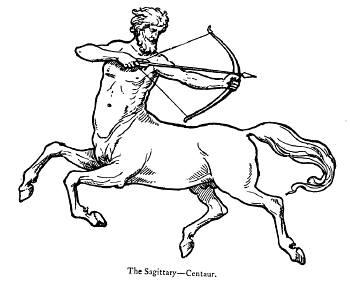
Turkish archery, escapes in front of the enemy, while galloping he turns back and shot the arrow. A war trick that was used among Turkish tribes. Turks lived on horse, sleeps on horse, traveled on horse, fights on horse, and they where seen as one: "Horse-man".... So, they create "Centaurs"... Like the Cimmerian and Scythian Turks...


Unbreakable records belongs to ;

Tozkoparan İskender (15th c) = 1281.5 (gez) /846 m.

and Bursalı Şüca (16th c) range 1271.5 (gez) 

Sultan Mahmud II (1785-1839), in 1817, he has taken 1200 (gez), and the American ambassador was surprised.
In the 19th century the criteria was fixed to 1 (gez) = 60.74 cm

European Archers record ;300 m. 
While a Turkish Archer could not have been nominated in the Ottoman Empire if it is not 600 meters....


Artiquid (Artuklu) Turks (coin - 13th c)
with "Wolf-Dragon" Tail as Centuar, with "Turkish Shot"

Turkish Warrior; "Turkish Shot" and Horse with "Knotted Tail"
Left: Tarskii Northern Ossetia,catacomb 6 (8th-9th c AD)
Right: Sulek- Khakasia (Hakasya) 

Turkish Khaganate (i.e. Gokturks), 7th-8th c

White Hun Turks (Hephthalites), 5th-6th c

Khazar Turks, Belt - 6th-9th c

A Khazar Turk on hunting (detail from a pot)

Khazar Turks, Belt - 6th-9th c

Mamluk Turks 14th c

Turkish Warrior, Akdamar Church/Van-Turkey

A Turkish Warrior; Tang-Turk period, 7th c, "Turkish shot" and his "Horse with Knotted Tail".
Not a phoenix, but a rooster, and not "China Culture" as the museum says! Look for Seljuk Turks "Rooster shaped Vase"
(The word " T'u-küe " in Chinese sources is the word " Turk ".)

"A Turkish Warrior", Khazar Turks, Belt, 7th-10th c

"A Turkish Warrior", Seljuk Turks, 11th-13th c


A Turkish warrior with his horse "knotted tail", "Turkish-Shot", cylinder seal, 1000 BC
Those who do not want to admit that the "Parthian Shot" (and Parthians) is a Turkish tradition (and tribe) show immediately this picture. However, it writes "Steppe Rider" in the text above, and according to the fact, the Assyrians are not "Steppe Riders", neither are the Persians! (Persians are also to be seen first in 800 BC). 
Maybe Mongolians were in 1000 BC in Mesopotamia !!! :D :D
Because of the date (1000 BC) can not be named as "Parthian Shot",
Parthian name came first in the 3rd c BC on the records.
Three thousand years of Turkish culture and continuities in art ...
SB


Not "Turkic" or "dynasty-tribe name", more accurate name to use is the "surname": "Turks" "Turkish", so...
Turkish Culture & Art

19 Aralık 2015 Cumartesi

ISMAIL AL JAZARI MACHINES AND NEW TECHNOLOGIES


for the photo: Metropolitan Museum
again, did not mention that he is a "Turkish" Scientist
I condemn you 


Al-Jazari was a 12th Century Turkish Scientist, Engineer and writer. His full name was Badi Al-Zaman AbulI-Izz Ibn Ismail Ibn Al-Razzaz Al Jazari. He lived in Diyarbakir region in Turkey (1206 AD). As his town name is Cizre, the modern Turkish scripting of Jizra , his last name is known as Jazari. Badi Al Zaman means “prodigy of the Age” and was applied to other well-known men. He served twentyfive years the Artuks,(Artiquids/Artuklu) a Seljuk Turkish dynasty in Diyarbakir, as a chief engineer – as did his father before him.

Artuklu were divided into two main branches, descended from two sons of Artuk Bey, İlgazi Bey and Sökmen Bey. Artuk Bey took in 1086 Jerusalem and he died there. Hasankeyf, Mardin and Harput was ruled by Artuklu Dynasty. Hasankeyf was build by Sökmen Bey and was the capital city, later they moved to Diyarbakır. İlgazi Bey was in Mardin and Melik İmameddin Ebubekir was in Harput. Al Jazari’s masters belonged to the Sökmen branch of family.

He authored and drawed 60 inventions in his book "Al-Jami Bain Al-Ilm Wal-Amal Al-Nafi Fi Sinat'at Al-Hiyal" (The Book of Know-ledge of Ingenious Mechanical Devices). Kitab al-Hiyal is an interesting work on automatic control mechanism, fountains, devices, pipes, valves and siphons. The importance and originality of Kitab al-Hiyal is due to its being an earlier example of the automatic control studies in the history. Al-Jazari wrote his book in Arabic alphabet that was dynasty palace’s language at that time.

There are a number of manuscripts of Jazari’s work in Oxford, Leiden, Paris, Dublin and İstanbul. Equally cranks may have first been documented by Al Jazari – 300 years before western engineers achieved this (Francesco di Giorgio Martini and Leonardo Da Vinci). He used some kind of symbols for understanding of his drawings like using of electronic circuits. We found that his machine drawings and manufacturings quite qualified understanding.

Prof. Lynn White Jr. writes: "Segmental gears first clearly appear in Al Jazari, in the West they emerge in Giovanni de Dondi's astronomical clock finished in 1364, and only with the great Sienese engineer Francesco di Giorgio (1501) did they enter the general vocabulary of European machine design". He is also regarded as one of the first recorded designers of a humanoid robot (cybernetics).


Abdullah UZUN, Fahri VATANSEVER
Sakarya University, Technical Education Faculty
acta mechanica et automatica, vol.2 no.3 (2008)


"Al-Jazari, a Turkish engineer of the 13th century whose achievements include the crank, the camshaft, and the reciprocating piston."

Masood, Ehsan.2009 , 
Science & Islam : A History


Eski Hendek Türk Artuklu, 13.yy. Cizre : link
Old Moat - Artiquid Turks Period 13th c - Cizre
A dragon and centaur 


The Castle Water Clock

I was fervently attached to the pursuit of this subtle science [of machines] and persisted in the endeavour to arrive at the truth. The eyes of opinion looked to me to distinguish myself in this beloved science. Types of machines of great importance came to my notice, offering possibilities for types of marvellous control.
Badi al-Zaman al-Jazari, Turkiye, 1206

Bu ince bilimin [makinelerin] peşine hararetle düştüm ve gerçeğe ulaşma çabamda ısrarcı oldum. Bu sevgili bilimde farkımı ortaya koymam için tüm gözler bana çevrilmişti. Büyük öneme sahip makine türleri dikkatimi çekti ve muhteşem kontrol türleri için olanaklar sundu.
Badi al-Zaman El-Cezerî, Türkiye, 1206
(Ebu’l-‘Izz Isma’il b. Er-Rezzaz El-Cezeri )


Ismaeel al-Jazari was an inventor and engineer who lived in Mesopotamia during the late 12th and early 13th centuries.

Very little is known about al-Jazari’s life, though it is thought that he served as chief engineer and adviser at the Artuklu Palace, the residence of the Mardin branch of the Turkish Artuqid dynasty. In 1206 he presented his sultan with the Book of Knowledge of Ingenious Mechanical Devices, which provides great insight into craftsmanship and engineering in medieval Arab society. Al-Jazari described in detail a number of machines and practical devices including a water wheel and several clocks, alongside instructions on how to construct them. As well as having a practical function, many of the devices were eccentrically or fancifully designed. Examples include his ‘peacock’ fountain, a hand-washing device featuring humanoid automata as servants offering soap and towels....link


Türk Teknoloji Tarihinden İki Örnek; Cezerî ve Takîyüddîn

Bu araştırmada amaç bilim tarihine Türklerin yaptıkları katkıları göstermek için iki bilim adamımızın yaptıkları çalışmaları tanıtmak ve teknoloji tarihindeki yerlerini belirlemektir. Bu amaçla, bu çalışmada 13. yüzyıl bilim adamlarından Cezerî’nin (13. yüzyıl) el-Câmi‘ Beyne’l-‘İlim ve’l-‘Ameli’n-Nâfi‘fî Sın‘ati’l-Hiyel (Makine Yapımında Yararlı Bilgiler ve Uygulamalar) ve 16. yüzyıl bilim adamlarından Takîyüddîn’in (1521-1585) Kitâb et-Turukü’s-Seniyye fî el-Âlâti’r-Rûhâniyye (Otomatlar Üzerine Yüce Yöntemler) adlı kitapları incelenmiş ve teknoloji tarihindeki yerleri belirlenmeye çalışılmıştır.

Yunan Dünyası’nda hava, boşluk ve denge prensipleri üzerine Ctesibios (M.Ö. 3.yüzyıl), Philon (M.Ö. 2. yüzyıl) ve Heron (M.Ö. 1. yüzyıl) tarafından çalışmalar yapılmış ve bu çalışmalar sonucunda da çeşitli araçlar geliştirilmiştir. Yine bunların arasında Archimedes’i (M.Ö.287-212) de saymak gerekir. Bu çalışmalar çevirilerle İslâm Dünyası’na aktarılmış ve bu çalışmaları, Benû Mûsâ (9. yüzyıl), Fârâbî (874-950), Hâzînî (yaklaşık 1100’ler) ve Cezerî’nin (13. yüzyıl) çalışmaları izlemiştir.

Mûsâ Kardeşler’den Ahmed’in yazmış olduğu Kitâbü'l-Hiyel (Makine Yapımı) adlı eser bu konudaki özgün eserlerden birisidir. Ahmed bu kitabında hava, boşluk ve denge prensiplerini temele alan yüz aracın tasvirini vermiştir. Bu araçlar, sihirli ibrikler, fıskiyeler, lambalar, su seviyesini sabit tutan araçlar, kaldıraç ve körüktür. Bu araçların yapımında düz, çift ve kıvrık sifonlar, şamandıra yoluyla valf kontrolü ve hava kontrol mekanizmaları kullanılmıştır. Yine Fârâbî de hava ve boşluk üzerine çalışmış ve konu hakkındaki görüşlerini Risâle lî-Ebî Nasr el-Fârâbî fî’l-Halâ (Boşluk Üzerine) adlı bir risâlede vermiştir. Hâzînî’nin ise denge konusunda yazdığı Kitâb Mizânü'l-Hikme (Bilgelik Ölçüsü) adlı kitabı oldukça önemlidir. Hâzînî bu kitabında su terazini olağanüstü bir denge aracı haline getirmiş ve “Mizânü'lCâmî‘” (Toplayan Terazi) adında bir terazi yapmıştır. Bu konudaki en önemli isim Cezerî’dir. İkinci örneğimiz ise, 16. yüzyılda Osmanlılar'ın en önemli astronomi bilgini olan Takîyüddîn’in Kitâb et-Turukü’s-Seniyye fî el-Âlâti’r-Rûhâniyye adlı kitabıdır. 


Yrd. Doç. Dr. Yavuz Unat - devamı PDF'de
Türk Bilim ve Teknoloji Tarihi Kongresi ("Türk Teknoloji Tarihinden İki Örnek: Cezerî ve Takiyüddîn" adlı bildiri ile), Türk Bilim Tarihi Kurumu Derneği, TÜBİTAK, Türk Tarih Kurumu, İSAR Vakfı, İSKİ, Türkiye Kimya Derneği ve Su Vakfı tarafından Đstanbul'da 15-17 Kasım 2001 tarihleri arasında düzenlendi (("Türk Teknoloji Tarihinden İki Örnek: Cezerî ve Takiyüddîn", 1. Türk Bilim ve Teknoloji Tarihi Kongresi Bildirileri (15-17 Kasım 2001), Türk Teknoloji Tarihi, Yayına Hazırlayanlar: Emre Dölen, Mustafa Kaçar, İstanbul 2003, s. 75-94. 


Dünyanın ilk sibernetik bilgini ve 60 makinenin mucidi İsmail Ebul-İz El-Cezeri 
ve İstanbul Gözlemevi'ni kuran Takîyüddîn, Türk'tür.


Tılsım Kapısı


TILSIM KAPISI - BAĞDAT
Bab al-Talsim - Baghdad


Artuklular döneminde Bağdat'ı korumak için yaptırılan eserin yapım tarihi tam olarak net değil, ama 1183'te Granada'dan hacca gitmek için yola çıkan İbn-i Cübeyr (1144/5-1217) "Endülüs'ten Kutsal Topraklara" adlı eserinde buradan bahsetmekte. Binanın üzerindeki yazıta göre Abbasi Halifesi Nasır tarafından 1221 yılında restore ettirilmiş. Öncesinde kapıya Beyaz Kapı, ya da Bab Halba denilirken, üzerindeki yazıtlar ve rakamlar yüzünden restorasyondan sonra TILSIMLI KAPI adını vermişler.


F.Langenegger "Beiträge zur kenntis der baukunst des Irâq,1911" kaynağına göre, 1086 yılında Bağdat ziyaretinde bulunan Selçuklu Sultanı Melikşah buradaki hipodromda Çevgen /Çöğen (polo) oynamıştır, 1683 yılında Bağdat'ı fetheden IV.Murad'ta bu kapıdan girdikten sonra kapıyı kapattırmıştır. 1917 yılında tahribata uğramış.


(İngilizce kaynakta Osmanlı ordusu çekilirken diyor, ama İngilizlerin Bağdat'a girmesinden bahsetmiyor, sanki biz cinlerle savaşıyorduk ta kapı hasar gördü! Sabır...SB)


Kut-ül Amare 1916

1914 sonlarında Irak’a asker çıkaran İngiliz ve Hint askerleri, General John Nixon ve General Charles Townshend komutasında 1915 sonbaharında Bağdat’a doğru yürüyüşe geçti. 

Albay Nureddin Bey ( Nureddin Paşa) 27 Eylül 1915'’te İngilizleri Kut önünde karşıladı. İlk önce Bağdat'’ın 30 km güneyine kadar çekilen Türk ordusu, İngilizleri püskürttü ve General Townshend etrafı Dicle nehri ile çevrili Kut yarımadasında kuşatıldı.  Nureddin Bey'’in yerine Irak komutanlığına getirilen 52. Tümen Komutanı Halil Paşa kumandasındaki kuşatmayı yarmak için Basra’'daki İngiliz genel karargahının yaptığı üç taarruz da büyük kayıplar ve fiyaskoyla sonuçlandı.

İngiltere, General Aylmer komutasındaki birliklerin başarısız olan birinci taarruzun ardından Irak cephe komutanı J. Nixon'’ı azledip Percival Lake'’i bu göreve getirdi; ancak yeni komutan da kuşatmadaki birliklerini kurtaramadı. Çaresiz kalan İngilizler, savaşa birlikte girdikleri Rusya’'dan yardım istedi. O dönemde İran'’ın Kirmenşah bölgesini işgal etmiş olan Rus kuvvetlerinin komutanı Baratov’'un Kut üzerine yaptığı saldırı da sonuçsuz kaldı. 

Kurtuluş ümidi kalmayan, erzak ve cephane sıkıntısı çeken General Townshend, Halil Paşa'’ya 26 Nisan'’da mektup yazarak Kut'’u teslim etmeye hazır olduklarını bildirdi.  Halil Paşa ise birlik, silah ve cephaneleri teslim etmesi şartıyla istediği yere gidebileceği cevabını verdi. Townshend ise tüm silah ve cephanesini yok ettirerek 29 Nisan 1916'’da teslim oldu.  Yaklaşık 5 ay süren kuşatmanın ardından, 13 general, 481 subay ve 7 bini Hintli 13 bin 300 İngiliz askeri Türk birliklerine teslim oldu. Tarihe Kut'ül Amare Zaferi olarak geçen savaşlar sırasında İngilizler 40 bin kayıp ve esir verirken Türk birlikleri ise 25 bin askerini kaybetti. 

Kut'ül Amare savaşı sırasında Türk birlikleri sınırlı sayıda uçakla önemli görevler yaptı. Keşif görevleri yapan Türk uçakları bir taraftan da düşman hedeflerini bombardıman etti. 26 Nisan 1916’'da Kut'ül Amare'’deki İngiliz kuvvetlerine erzak yardımına çalışan bir İngiliz uçağı da Türk avcı uçağı tarafından düşürüldü. 

Ancak kazanılan bu tarihi zafere rağmen savaşın genelinde mağlup olan Türk ordusu, takviye edilen İngilizlerin bölgeyi Şubat 1917'’de işgal etmesine engel olamadı. Irak’'ın güneyine 1914 sonlarında çıkarma yapan İngilizler, ancak Mart 1917’de Bağdat'’a ulaşarak kenti işgal etti. (linkten)


"I.Dünya Savaşı'ndaki 2 zaferimizden biri durumundaki Kut'ül Amare Zaferi (29 Nisan 1916) 1952'ye kadar Kut Bayramı olarak kutlandı." - Sinan Meydan


Türkiye’nin NATO’ya üyeliğiyle birlikte, 1952’de İngilizlerin isteği ve baskısıyla eğitim müfredatlarından çıkarılmış, bayram olarak kutlanmaktan da vazgeçilmiştir!..


kaynak:
from the link above, but I wanna say some words....

"The Talisman gate in Baghdad was destroyed by the Ottoman army in 1917 when they withdrew from the city.... " - You say so, but why do you not say about the British Army and the Fall of Baghdad (1917)? To who belonged that land before it was Iraq (Irak) ? Who did the Ottoman Turks fight with? The borders were drawn by the spy Gertrude Bell....Not nice to not mention about this action.

Dragon is the Master of Time in Turkish Cosmology. And Polo is invented by the Turks.


from the link
The Talisman gate in Baghdad was destroyed by the Ottoman army in 1917 when they withdrew from the city. Its destruction was a great loss as it had some fine thirteenth century carving and distinguishing ornamentation. 

The date of its construction is not clear but it was described by Ibn Jubayr in 1185 and is mentioned in the accounts of the Mongol siege. The inscription on the building reads that it was built and restored in 1221 by the Abbasid Caliph Nasser li-din-Illah as part of the construction of a large defensive wall intended to protect Baghdad from invaders and floods. It was named "Talisman" after the unusual inscriptions and figures carved on its upper walls and gate. 

Before 1221 it was known as the White Gate and as Bab Halba meaning racecourse referring to a hippodrome located outside the wall limits. It is said that the Seljuk Sultan Malik Shah on his visit to Baghdad in 1086 rode from his palace to that spot where he played a game of Polo (or Suljan), after which the field was commonly used to play this game. In 1638 the gate was been closed after the Ottoman Sultan Murad IV conquered Baghdad and entered its gate.

The gate is built of burnt bricks and consists of a cylindrical tower connected to Baghdad's northeastern ramparts surrounded by a moat. Its façade is punctured at approximately mid-height by a series of loophole windows toped by an inscription band wrapping around the building. The façade ends with a second line of pointed arch openings on the entire circumference serving as access doors to a circular balcony supported on brackets. 

The inscription and the carvings are the most important features in the building. Despite the information it carries concerning the gate's construction, its sponsors and restoration by Nasser li-din-Illah, the high relief above the gate presents unfamiliar pictorial representations of human figures that must have roots in Mongol sculptural animation. The gate's arch is built of intersecting stone voussoirs set in a decorated frame. The decoration shows a pair of winged dragon-snakes and a human figure sitting cross-legged between them in a way to represent the glorious conqueror. They haven't been attributed to any sultan although they might be of a later addition carved to commemorate Sultan Murad IV entering Baghdad by. These figures are carved in stone and lie on an intricate background of floral interweaving patterns incised in stone.


Sources:

Langenegger, Felix. Beiträge zur kenntis der baukunst des Irâq (heutiges Babylonien) Bautechnik,/b baukonstruktionen und aussehen der baugegenstände unter teilweiser bezugnahme auf die baukunst der vergangenheit des landes sowie auf die gesamte baukunst des Islâm, 88-90. Dresden, G. Kühtmann, 1911.

Le Strange G. Baghdad During the Abbasid Caliphate, 291-292. Greenwood Press. Connecticut, 1983.


Khakassia - Kırgız /Turkish Culture


Cizre Grand Mosque doorknop - Turkish Culture - Artiquids Period 12th c


"ARTUK OĞULLARI; BU GÜN EN GÜZEL ESERLERİNİ MARDİN DE BIRAKMIŞLAR, TAŞ USTASI BU TÜRK BOYU ZAMANLA DİLİNİ, SELÇUKLU VE OSMANLININ İHMALİ İLE KAYBEDİP KÜRTLEŞMİŞLER. EY KENDİNİ KÜRT ZANNEDEN MARDİNLİ KANDAŞIM, SENİN ATAN ARTUKOĞULLARI. YA SEN ARTUKOĞLUSUN YA DA SEN ARTUKOĞULLARINIIN SOY KIRIMCISISIN. TIPKI BİTLİS VE HAVALİSİNDE YAŞAYAN AK-KOYUNLAR KARA- KOYUNLARIN DURUMU GİBİ. BAK AŞAĞIDAKİ ARTUKOĞULLARINA AİT CİZRE ULU CAMİ KAPI TOKMAĞI, SENİN TARİHTE VAR MI BÖYLE GÜZEL BİR İZİN? HADİ AZ CESUR OL, BU BENİM DE! ASLINI İNKAR ETME! BİLİYORSUN SÜRÜDEN AYRILANI İSRAİL KAPIYOR ARTIK"...Mehmet Ali Esmer/Mimar


The Artquids Turks or Artuqid Turkish Dynasty (1102-1409) Coin:
A iconography, like Shaman riding on a dragon, uses snake as whip . In Anatolia there are legends, myths of saints riding lions using snake as whip. like Saint "Hacı Bektaş Veli" impersonate Dragon . I think it is quite a shamanic myth .. Dragon is the TIME GOD .. May represent that "the Shaman is controlling the Tıme" ...

A Shaman called in Turkish = Kam ; and whip = Kam-çı)


Dragon-headed Stand, 13th century, cast brass inlaid with silver
Northern Iraq or Syria


Brazier of Mamluk period
second half of 13th century - Egypt
Mamluk Dynasty is a Turkish Dynasty, (Kipchak Turks), 
no mention in museum's info of that!
I condemn these museums
it is TURKISH CULTURE.
SB


Kurt-Ejder, Hayat Ağacı, Ahşap Kapı MS.3.yy, Niya Antik Kenti - Tarım Havzası
Kurt-Ejder, Hayat Ağacı, Rölyef MS 13.yy Selçuk Türkleri - Anadolu


Türk Tarih Tezine karşı çıkanlara sormalı ; "Farklı isimler altında farklı zamanlarda hüküm sürmüş medeniyetlerde devamlılığı görülen bir çok kültür etkileri neden acaba 'Indo-European, Indo-İranian" da görülmüyor da Türklerde görülüyor?"... SB